

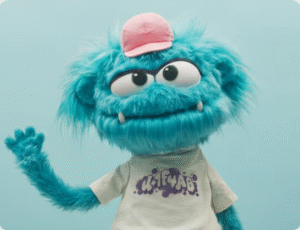
 Patch is on a mission to decode the tech world.
First stop: Telstra’s top tech friends. Patch finds out how some of the brightest minds we know started their adventure with tech.




1) What made you love science and tech? Was there one ‘whoa I love this stuff’ moment?
 I grew up in the ’90s and remember life before and after the internet. Suddenly there was this whole new world where you could connect with people, learn anything, and build something out of nothing. That moment, realising you could make something digital that actually worked! completely hooked me. It felt like creativity and logic shaking hands.
2) When your big old noggin’ is stuck on a tricky problem, how do you find the answer?
There’s a thing in tech called “rubber ducking.” You literally explain your problem out loud sometimes to a person, sometimes to an inanimate object and the simple act of talking it through can often help you see the answer. I also find stepping away from the screen. A walk in nature or shower can fix bugs better than caffeine ever could!
3) Some people think learning STEM is kinda boring. Are they right? And if so, how can we make it more fun?
It can feel boring if it’s all theory with no connection to real life. The magic happens when you can see how STEM solves problems you actually care about like music, gaming, or climate change. Making it fun is about bringing it closer to someone’s world.
4) If you could give your younger self (or kids today) one piece of advice about creating with tech, making cool stuff, or just figuring out how digital things work, what would it be?
Follow your curiosity. Don’t worry about learning the “right” way, just start tinkering with things that already interest you. The best tech skills come from playing, not perfection.
1) What made you love science and tech? Was there one ‘whoa I love this stuff’ moment?
 Since I was young I’ve loved science fiction and seeing robots in movies. So in university I took on electrical engineering hoping to work on robots, and after a diving accident when I was 20 left me with a neck injury contemplating what life might have been like if it were permanent, I went out to meet people and hear their stories. Meeting friends with high level physical disabilities who utilise human connection and technology to assist in communication, mobility, being creative, and even running businesses inspired me to apply my interests in robotics and AI to my inspirations in human experience and connection. So I began work on a mind controlled wheelchair, which took years to get working, but when it finally did (after a failed first set of trials) and I watched a mate control it with his thoughts through a small obstacle course, then look at me and say with a smile “It works”… that was my ‘whoa I love this stuff’ moment, knowing that we can make a difference in the lives of others!
2) When your big old noggin’ is stuck on a tricky problem, how do you find the answer?
3) Some people think learning STEM is kinda boring. Are they right? And if so, how can we make it more fun?
4) If you could give your younger self (or kids today) one piece of advice about creating with tech, making cool stuff, or just figuring out how digital things work, what would it be?
1) What made you love science and tech? Was there one ‘whoa I love this stuff’ moment?
 I keep falling in love with tech over and over again – then I get mad when my code doesn’t work, I keep going until it finally works and then… I love it again! So, when I was younger that looked like trying to play games with my friends on the computers at school and sharing our tricks to get to the next level. I loved everything at school though: english, drama, maths, music, tech and science. The hard part was picking what I was willing to sacrifice because there’s only so many subjects we were allowed to pick,
I can remember building my own website and designing it to be what I wanted it to look like and thinking “whoa. I can’t paint my bedroom a heap of different colours but this website I can paint whatever colours I like!”. As a young person that felt pretty special to have your “own space” online. I still get a kick out of that now.
2) When your big old noggin’ is stuck on a tricky problem, how do you find the answer?
“It’s OK to not know what you want to be when you grow up – because the future hasn’t been invented yet!”. Around 80% of the jobs a young person growing up today will have don’t actually exist yet. So I find it hilarious when people say to someone in high school “what do you want to be?” because they can only choose from 20% of the possibilities! What that means in reality is you can stop thinking about whether this is right for your career and just have a bit of fun and learn what you like doing. Learn how to think about things in different ways. Learn how to break stuff safely so you can figure out how to fix it… or build something completely different. The secret kids never get to hear is that adults are winging it too – they just have to pretend to know what they’re doing while they’re figuring it out!
3) Some people think learning STEM is kinda boring. Are they right? And if so, how can we make it more fun?
STEM as a word is something adults made up: so the word itself is definitely boring! I think bundling Engineering and Tech and Maths and Science together in one word means people think if they have a bad experience with one of those things, they think they will find all of them boring. For example, in Science you need to have a hypothesis and test and get answers from an experiment after. In tech, you can just jump in and test and experiment for a while, break a few things then figure out the hypothesis. Different approaches for different purposes and those appeal to different brains at different times.
STEM can be seen as boring when it’s seen as something you need to be perfect at. I find it way more fun when that pressure isn’t there, and you’re just making mistakes and figuring things out and learning along the way. Some of the world’s best inventions and innovations came from when they were working on something else or even just a good oopsie…
The Australian who invented wi-fi was originally looking at black holes in space and ended up revolutionising how we connect to the internet. And another Australian was just curious about studying bacteria and moulds – not trying to save millions of lives – but ended up turning penicillin into the world’s first antibiotic medicine. When you’re just following your curiosity and not worrying about being perfect, that’s when the magic happens!
4) If you could give your younger self (or kids today) one piece of advice about creating with tech, making cool stuff, or just figuring out how digital things work, what would it be?
If I’m really stuck I know I need to NOT think about the problem for a bit: so the answer sometimes comes when I’m in the shower, or when I’m hanging out with friends and they say something that makes me think about the problem in a different way. The one that always makes me laugh is when I go to bed thinking about a problem and I wake up the next day and I have the answer – my dreams will have been about the problem subconsciously, but that might literally be that I dreamt about going to France in a rowboat
1) What made you love science and tech? Was there one ‘whoa I love this stuff’ moment?
 Our entire world revolves around Science and Technology – it’s part of everything that we do! I had amazing teachers at school who made Science fun. It was always hands-on and it helped me make sense of the world around me. When I became a teacher I loved making Science fun for my students and by bringing technology into the learning made it 100% better! We were making movies, recording our learning, coding games, and using technology to help design scientific solutions. There are so many moments that make me think ‘I love this!” but one that really sticks with me was with a class of year 2 students. We had a problem at school. The crows had become really smart. They used to wait until after eating time and pick up the food scraps from our eating area, but we had become really good at leaving no mess that they taught themselves how to go into our school bags and lunch boxes to get food! Our class decided that we needed to come up with a solution for this problem. What I witnessed in their solutions was so amazing! One group designed crow scarers using old CD’s. They could describe the scientific material properties of the CD and why these would be both weather proof and scary to crows to keep them away. Another group, with some assistance, created a crow alarm with a micro:bit. It would sense movement (up high where only crows would move) and this would trigger a recorded sound (the students calling out ‘Go away crows!). Another group created a variation of a wind chime using their knowledge of forces to create the varying sounds. Every group’s idea was completely different, but was empowered by their knowledge and skills. And yes, we managed to keep the crows away from our lunch boxes!
2) When your big old noggin’ is stuck on a tricky problem, how do you find the answer?
I talk to others – one of two things will happen. More often than not, as I start talking to other people about my problem and I’m having to express it in detail, I actually answer my own question! But if I still don’t know, the people I am talking to have a different set of knowledge and experiences that can often help me get unstuck. And if they don’t know, they may know someone else who can help. When talking through the problem I also like to record ideas down on a sheet of paper whether it looks like a brainstorm, a diagram or just a bunch of random words. This usually leads to new ideas, new concepts, and then something even better than what I started with.
3) Some people think learning STEM is kinda boring. Are they right? And if so, how can we make it more fun?
If you see STEM as a bunch of subjects that you need to know a lot of facts about, then you will think it is boring. But STEM is all about solving problems, and we do this by brainstorming ideas (simple, easy, and sometimes crazy), building prototypes, trying different ideas, testing out our ideas, and then adjusting our ideas and trying again. STEM is fun because we are building, modelling, creating, designing, experimenting, discussing, and thinking outside the box. STEM is learning by doing. It is collaborating with others. It is being in different environments and getting our hands dirty, and best of all, it’s about experimenting and knowing that every step that I take is something new for me to learn and help me to reach my goal.
4) If you could give your younger self (or kids today) one piece of advice about creating with tech, making cool stuff, or just figuring out how digital things work, what would it be?
My advice is ‘be prepared for chaos and embrace it’. If we are creating with tech, making cool stuff, coding a game, trying a new program, building a prototype, whatever it is, the start of it is messy and chaotic, and this is normal! When something doesn’t work, it isn’t a failure, it is a way of learning something new. So, start each project with an open mind knowing that it won’t be perfect on the first go. When I was creating the Moonhack projects for this year I went through 14 different ideas before finding the 6 projects that have been featured. Each project had at least 3 different ideas on how the project could work, and when I found the right ‘story’ for the project I would go through many different ways of creating the code to get to the final product. The chaos at the beginning of not knowing how to get to the end, was the best part, because it challenged me to look at different ideas and find the perfect fit. When you embrace the ‘chaos’ at the start of the project, when you get to the end you’ve got something you can be really proud of – this is the best feeling in the world!