
- Alexandra Whitwam - Youth and Community Senior Manager, Telstra Foundation
Just two years ago, the Telstra Foundation Youth Advisory Council invited us into their digital world.
Through A Day in Our Digital Life, our inaugural Council shared honest reflections about what it meant to grow up online. They spoke about friendship, connection, entertainment, learning and the ways technology threaded through their everyday lives. Digital technology wasn’t something separate from life; it was simply part of how life was experienced.
When we asked our 2026 Youth Advisory Council to revisit the same exercise, we expected to hear about new platforms, changing habits and evolving online trends.
What we didn’t expect was how they would show us that fundamentally the conversation has shifted.
As Council members reflected on their experiences, the discussion moved beyond screens and apps and towards something much deeper: how do young people make sense of the digital world around them? Conversations about social media soon became conversations about AI. Discussions about content became discussions about trust. Reflections on being online evolved into reflections on authenticity, truth and what it means to be human in a digital world.
One question, two very different projects
Tell us about your digital life? In 2024, young people described what they did online. In 2026, they found themselves questioning what they could believe online.
Two years ago, the YAC were concerned about AI-generated content, deepfakes and synthetic media. Today, young people are navigating a world where even more photos, videos, voices and even entire conversations are being generated artificially. The challenge is no longer simply finding information. It’s assessing whether that information is trustworthy, authentic and real.
Again and again, Council members returned to this idea. Not because they believed everything online was fake, but because certainty itself feels harder to find. As one young person put it:
“The hardest part isn’t that everything is fake. It’s that sometimes I can’t tell what’s real anymore.”
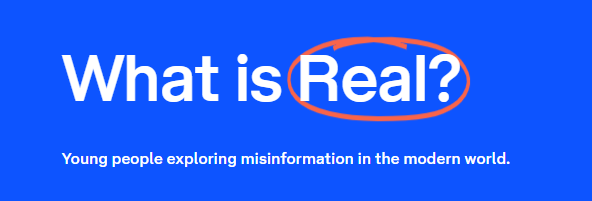
That insight became the foundation for their project, What’s Real?
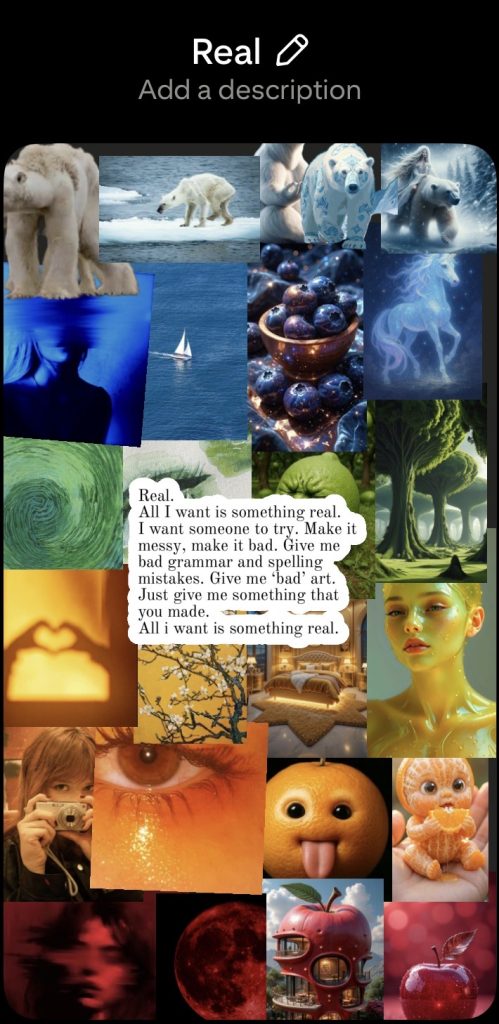
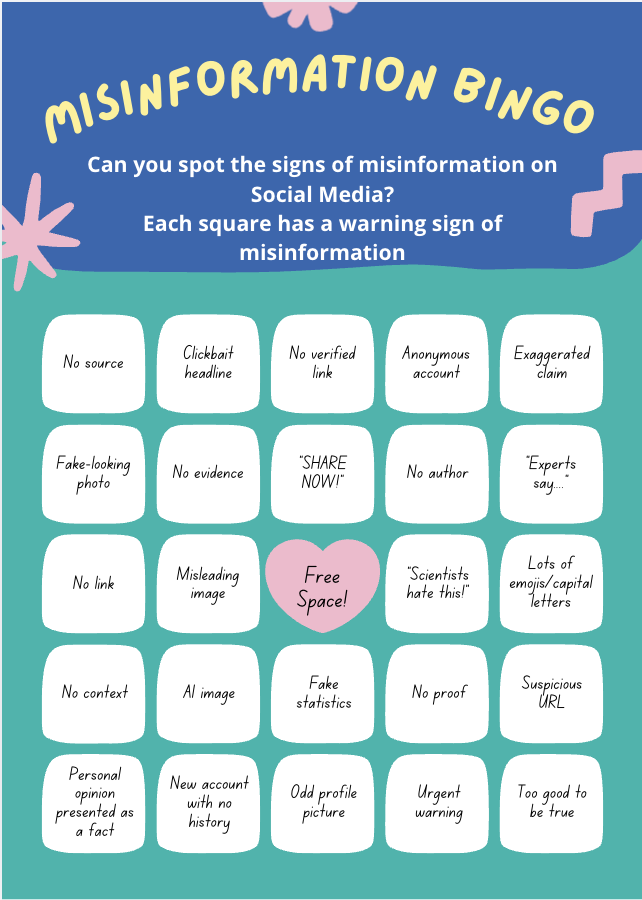
Rather than writing reports or compiling recommendations, the Council decided to respond creatively to the questions they had been grappling with. The result is a collection of poems, artwork, collages, music and reflections that explore truth, creativity, control, identity and human connection in an increasingly complex digital world.
Taken together, these pieces do more than showcase young people’s perspectives. They provide a snapshot of a moment in time. A record of what it feels like to come of age in a world where technological change is accelerating so quickly that the questions occupying young people’s minds can transform within just a few years.
Deep reflection
What struck us most was the depth of thought throughout the collection.
While discussions about AI often focus on technology itself, the Council’s reflections kept returning to human questions. Questions about trust, creativity, agency and control. Questions about what might be lost, and what must be protected, as technology becomes increasingly capable.
There is uncertainty in these works, and there is also curiosity. There is concern, and there is also hope. Throughout the collection, young people demonstrate a remarkable willingness to engage with complexity rather than shy away from it. They are not passive recipients of technological change. They are actively trying to understand it, challenge it and shape it.
Your invitation to dig deep
The YAC has given us more than a collection of creative works. They’ve offered us a rare opportunity to see the digital world through young people’s eyes, at a time of extraordinary change.
So, take some time. Read the poems slowly, look closely at the artwork, ponder on the videos. Pay attention to the moments that resonate and the moments that make you uncomfortable.
Sit with what these young people are telling us, we did and it feels profound.
In a world overflowing with content designed to capture our attention for a few fleeting seconds, the greatest gift we can offer these young people is something increasingly rare: our time, our attention, and a genuine willingness to engage and shift our perceptions.